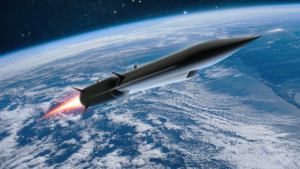
Military space architecture disaggregation is an innovative opportunity to stay ahead of adversaries, increase technological advancement and decrease production costs, the Air Force’s space wing said Aug. 22 in a new report. Air Force Space Command (AFSPC) in its white paper, Resiliency and Disaggregated Space Architectures, touted the advantages of space disaggregation, or spreading capabilities onto multiple platforms or systems. Disaggregation improves mission survivability by increasing the number and diversity of potential targets, thereby complicating an adversary’s decision calculus and…
Recommended
Trending
Congress Updates
House Heads For Recess Without Moving On NDAA After Procedural Vote Fails
The House will leave for the Fourth of July recess without moving forward on its $1.15 trillion fiscal year 2027 National Defense Authorization Act (NDAA), with a procedural vote to […]
Bipartisan Group Of House Members Introduce U.S.-Ukrainian Co-Production Bill For Unmanned Systems
A bipartisan group of six House legislators have introduced the Strategic Unmanned Systems Partnership Act–a bill to improve drone collaboration between the U.S. and Ukraine. Rep. Michael McCaul (R-Texas), the […]
Will $4 Billion For SB-AMTI/Space Data Network Backbone In Supplemental Reduce Or Add To Planned Funding For Systems In Reconciliation?
Nearly all of the Department of the Air Force’s fiscal 2027 procurement and research and development (R&D) budget for space-based air moving target indication (SB-AMTI) and the Space Data Network […]
House Appropriators ‘Concerned’ With JLTV A2 Delays, Shift Funds For Marines’ Second Supplier Effort
House appropriators have said they’re “seriously concerned” with Joint Light Tactical Vehicle (JLTV) A2 delays, as their fiscal year 2027 defense spending bill shifts funds to support the Marine Corps’ […]
By