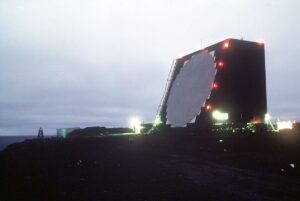
Lockheed Martin [LMT] has received an order for two of its Biological Aerosol Warning Systems (BAWS) from the Japan Ground Self Defense Force. Lockheed Martin began delivering BAWS to the Japanese military in 2004. The system consists of an array of networked, remote sensors that can provide tactical, early warning of the possible presence of a hazardous aerosol cloud. Lockheed Martin says the system fuses data from each of the sensors, allowing it to distinguish a bio-event from a dust…
Recommended
Navy, Marine Corps Experimenting With Large Scale Advanced Manufacturing Network During RIMPAC
Trending
Congress Updates
CBO Says Upfront Costs To Protect Military Installations From Drones Between $1 Million And $74 Million
The initial costs to acquire and deploy counter-small unmanned aircraft system (C-sUAS) defenses at individual Defense Department installations are estimated at between $1.2 million and $73.6 million depending on the […]
House Heads For Recess Without Moving On NDAA After Procedural Vote Fails
The House will leave for the Fourth of July recess without moving forward on its $1.15 trillion fiscal year 2027 National Defense Authorization Act (NDAA), with a procedural vote to […]
Bipartisan Group Of House Members Introduce U.S.-Ukrainian Co-Production Bill For Unmanned Systems
A bipartisan group of six House legislators have introduced the Strategic Unmanned Systems Partnership Act–a bill to improve drone collaboration between the U.S. and Ukraine. Rep. Michael McCaul (R-Texas), the […]
Will $4 Billion For SB-AMTI/Space Data Network Backbone In Supplemental Reduce Or Add To Planned Funding For Systems In Reconciliation?
Nearly all of the Department of the Air Force’s fiscal 2027 procurement and research and development (R&D) budget for space-based air moving target indication (SB-AMTI) and the Space Data Network […]